
COLORADO OFFICE
414 14th St. Suite 300
Denver, CO 80202
(303) 308-1190
WYOMING OFFICE
259 South Center St. Suite 206
Casper, WY 82601
(307) 268-9890

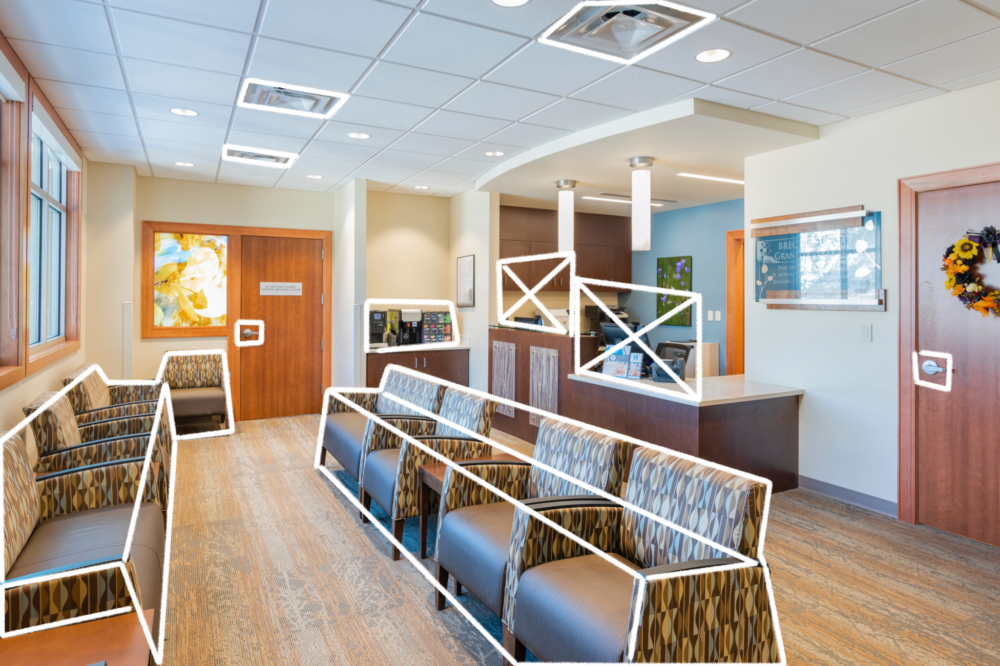

The COVID-19 pandemic forced healthcare organizations to rapidly reimagine how care is delivered within the built environment. While many early responses were reactive, the lessons learned have reshaped expectations for healthcare facilities moving forward. Today, resilience, adaptability, and operational continuity are no longer optional—they are essential components of effective healthcare design.
At MOA ARCHITECTURE, our work with healthcare providers across the region has reinforced that facilities must be designed to respond not only to infectious disease events, but to evolving care models, staffing challenges, and community health needs. The strategies that emerged during the pandemic now serve as a foundation for future-ready healthcare environments.
Indoor air quality quickly became one of the most critical considerations in reducing airborne transmission risks. Healthcare facilities must now balance infection control with patient comfort and operational efficiency.
Design considerations include:
Beyond pandemic response, these strategies improve overall patient outcomes, reduce staff exposure risks, and support long-term wellness goals. Designing mechanical systems with built-in flexibility allows facilities to adapt quickly without costly retrofits.
While surface transmission risk evolved over time, minimizing high-touch interactions remains a valuable infection prevention strategy. More importantly, touchless solutions enhance accessibility and user experience.
Common design integrations include:
These features support infection control while also improving workflow efficiency and creating a more intuitive patient experience.
Healthcare facilities must now be able to scale operations quickly during periods of increased demand. This requires spaces that can expand, contract, or shift function without disrupting care.
Strategies include:
Designing for flexibility ensures facilities can maintain safe distancing when needed while preserving operational efficiency during normal conditions.
Telehealth adoption accelerated dramatically, and it continues to play a significant role in healthcare delivery. Facilities must now support both in-person and virtual care seamlessly.
Key considerations include:
Rather than viewing telehealth as a temporary solution, forward-thinking organizations are incorporating hybrid care models into long-term planning, reducing facility strain while improving access to care.
The pandemic highlighted the importance of separating patient populations and minimizing unnecessary interactions. Rethinking circulation patterns can improve both safety and operational clarity.
Design strategies include:
These approaches help reduce cross-contact while improving the overall patient experience.
Perhaps the most important lesson from recent years is the need for facilities that can adapt quickly to changing conditions. Designing for adaptability extends beyond physical space—it includes infrastructure and operational planning.
Forward-looking considerations include:
These strategies enable healthcare organizations to respond to future disruptions—whether public health emergencies, evolving technologies, or shifting care delivery models.
Healthcare environments must also address the psychological needs of patients and staff. Visible safety measures, intuitive layouts, and access to daylight all contribute to a sense of trust and comfort.
Design elements that support confidence include:
These elements reinforce that safety, wellness, and care delivery are interconnected.
The pandemic accelerated change, but it also clarified the future direction of healthcare design. Facilities must now support adaptability, infection control, technology integration, and patient-centered care simultaneously.
By incorporating flexible infrastructure, improved air quality, touchless technologies, and adaptable workflows, healthcare organizations can create environments that not only respond to emergencies but also enhance everyday care delivery.
At MOA ARCHITECTURE, we view resilience as a design principle—one that ensures healthcare facilities remain effective, efficient, and supportive for years to come.
COLORADO OFFICE
414 14th St. Suite 300
Denver, CO 80202
(303) 308-1190
WYOMING OFFICE
259 South Center St. Suite 206
Casper, WY 82601
(307) 268-9890